Why Your AC Runs but the House Stays Warm: A Diagnostic Guide for Humid Alabama Homes
On a sticky summer evening in North Alabama, there are few things more frustrating than an air conditioner that runs nonstop but barely cools. Before assuming a major failure, it helps to understand how airflow, refrigerant, and controls work together when the humidity is high. A simple restriction in the return duct can mimic a refrigerant issue. A dirty outdoor condenser coil can look like a failing compressor. Walking through a logical sequence can save guesswork, help you describe the problem clearly, and reduce the chance of quick fixes that lead to repeat breakdowns when you need cooling most.
What Common Cooling Symptoms Reveal About the System
Specific symptoms often point to the part of the system that needs attention. Weak airflow at the vents suggests a clogged filter, matted evaporator coil, or high static pressure in the ductwork. Long runtimes with rooms that feel clammy can indicate inadequate moisture removal, excessive humidity entering the home, or a cooling system that cannot meet the load. An oversized unit that cycles too frequently on mild days or a blower set too fast can also contribute to poor dehumidification. Ice on the suction line or evaporator usually means low airflow or a refrigerant problem, and the correct fix depends on which came first. A unit that repeatedly trips a breaker may have a failing condenser fan motor, a defective run capacitor, or another electrical fault rather than a bad compressor.
If you are sifting through advice about AC performance in our region, guides on AC repairs in Tuscumbia, AL can give local context on humidity, duct designs in older homes, and the mix of heat pumps and conventional cooling systems common here. That context matters because the same symptom can have different root causes in a dry climate versus a damp one.
Start with Airflow: Filters, Coils, and Static Pressure
Airflow problems are a common root cause of poor cooling and coil freezing. Start with the return filter. If it is overdue or upgraded to a very high MERV rating, it can create high static pressure that restricts airflow through the blower. That drop in airflow lowers evaporator coil temperature, which can lead to icing and a sudden loss of cooling. Look next at the blower wheel and evaporator coil. Dust caked on the blower blades and lint matted across the coil fins act like felt blankets, cutting delivered CFM and forcing longer runtimes to meet the setpoint. A manometer reading of external static pressure can quickly confirm whether the duct system is the bottleneck.
Consider a realistic scenario: after a drywall project, a homeowner leaves the same filter in place. The system runs for 30 minutes before the suction line frosts and the supply air warms. Thawing the coil and replacing the filter may restore performance, while a technician can clean the blower wheel if needed without touching the refrigerant. The tradeoff to watch is filter efficiency versus airflow. Filters with high efficiency capture fine particles, but if the return grille is small or the duct is undersized, a moderate MERV filter may be the better choice to protect the coil while keeping static pressure within the blower’s rating.
Refrigerant Charge, Leaks, and Metering Devices
Once airflow is verified, the refrigerant circuit deserves careful testing. A system with a fixed orifice or piston is commonly evaluated using superheat, while a system with a thermostatic expansion valve (TXV) is commonly assessed using subcooling, following manufacturer instructions and appropriate operating conditions. Low refrigerant charge often produces high superheat and low suction pressure, although similar readings can result from other system faults. That is why airflow must be confirmed first. If charge is low, adding refrigerant without leak detection is a temporary patch that risks repeat service and compressor damage. Common leak points include Schrader cores, service valves, areas where copper lines rub against other surfaces, and the evaporator coil itself.
In another practical example, a heat pump cools fine in the morning but struggles by afternoon. A technician notes abnormal refrigerant readings and discovers that the TXV sensing bulb is loose on the suction line. Securing and insulating the bulb according to manufacturer instructions can restore proper refrigerant feeding across the evaporator. Metering device issues can resemble charge problems, so verifying sensor attachment, equalizer lines, and liquid line restrictions prevents misdiagnosis.
Outdoor Unit Health: Condenser Coil, Fan, and Electrical Parts
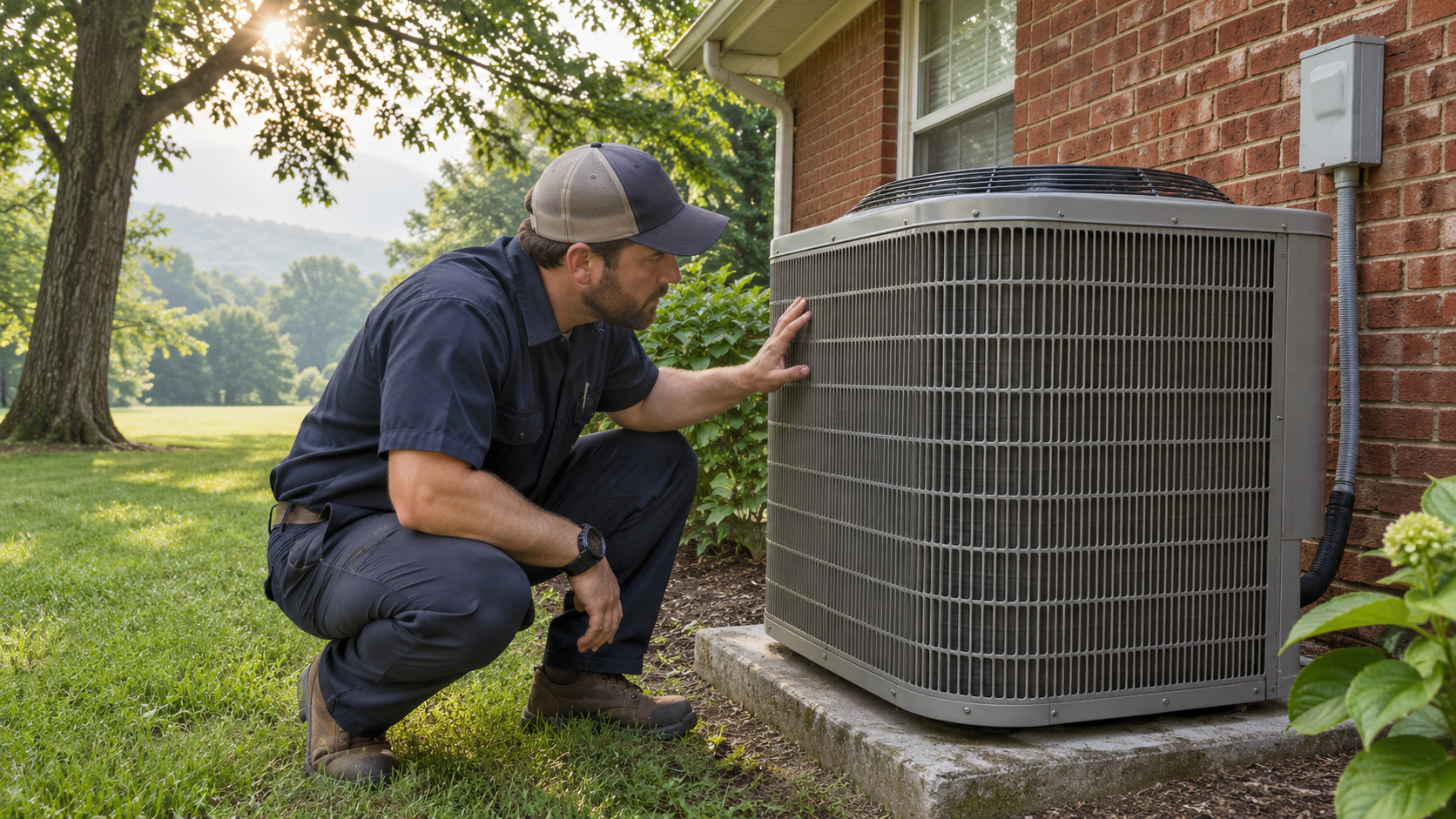
The outdoor condenser rejects heat. If its coil is clogged with cottonwood fluff or grass clippings, refrigerant pressure on the high side can rise, and cooling capacity can drop. Cleaning with a gentle rinse, following manufacturer guidance, protects delicate fins and helps bring operating pressures back into range. Check the condenser fan motor and the run capacitor as well. A weak capacitor can prevent the fan from operating correctly, causing pressures to rise even with a clean coil. Pitted contacts in the contactor can cause intermittent starts that look like thermostat problems. Electrical testing and capacitor replacement should be performed by a qualified technician because components can retain a dangerous charge even after power is disconnected. Maintain clearance around the unit on all sides and above it, since shrubs and covers that block discharge air will recirculate hot air through the coil and reduce cooling.
Controls, Condensate Safeties, and Short Cycling
Controls and safety switches often explain intermittent cooling. A thermostat configured for two cooling stages on a single-stage unit can cause operating problems and poor dehumidification. Heat pumps add another layer: a reversing valve stuck in an intermediate position can cause lukewarm air. Condensate overflow switches in the primary drain or secondary pan will shut the system off when the drain line clogs. You might notice cooling returns briefly after a float switch resets, then stops again as the pan fills. Clearing the drain line and correcting the blockage solves the symptom and prevents water damage. Never bypass the safety switch to keep the system running. Finally, remember that a higher blower speed may improve sensible cooling while reducing moisture removal. In humid weather, a slightly lower speed, within manufacturer airflow requirements, can improve comfort without changing the setpoint.
Putting this diagnostic order to work prevents circular troubleshooting. Start by confirming strong, unobstructed airflow at the filter, blower, and evaporator. Have static pressure tested when airflow restrictions are suspected. Only then should a qualified technician evaluate the refrigerant circuit with proper superheat and subcooling measurements for the metering device. Inspect the outdoor coil, verify the condenser fan and capacitor values, and look for control configuration problems or activated condensate safety switches. Document what you observe, such as frost on the suction line, a wet secondary pan, or breaker trips, along with outdoor temperature and thermostat settings. In a humid Alabama summer, those notes help a technician move quickly from symptom to cause, protecting your compressor and restoring steady cooling and effective humidity control when it counts.