Best Full-Arch Implant (All on 6) Dentists in San Francisco
Full-arch tooth replacement has changed dramatically over the past decade. Where patients once faced a choice between a loose denture and a series of individual implants, the All-on-6 protocol — a full arch supported by six strategically placed implants — has become one of the most requested treatment plans in the Bay Area. For anyone researching the best full-arch implant (All on 6) dentists in San Francisco, the challenge isn’t finding providers. It’s figuring out which type of practice actually fits your case, your bone volume, your timeline, and your budget.
This guide breaks down seven practice categories you’ll encounter across the city, ranked by overall strength for full-arch rehabilitation. Each entry includes what the practice type does well, where it falls short, and the patient profile it suits best. Because San Francisco’s dental market mixes academic centers, boutique prosthodontic offices, high-volume implant chains, and neighborhood general practices, the “best” choice often comes down to case complexity rather than marketing budget.
A quick editorial note: practices are grouped by category rather than ranked as individual offices, since staffing, pricing, and technology change frequently. Confirm current services, financing terms, and provider credentials directly with any office before committing to treatment.
1. Lands End Dental — Best Overall for All-on-6 and Overdenture Care
Lands End Dental earns the top spot because it treats full-arch reconstruction as a dedicated focus rather than a side offering. The practice’s All-on-6 and overdenture program is built around the full arc of treatment: diagnostic imaging and implant site assessment, surgical planning, the provisional phase, and the final prosthetic delivery. That continuity matters enormously in full-arch work, where the surgeon, the restoring dentist, and the lab all have to agree on implant position, angulation, and bite before a single incision is made.
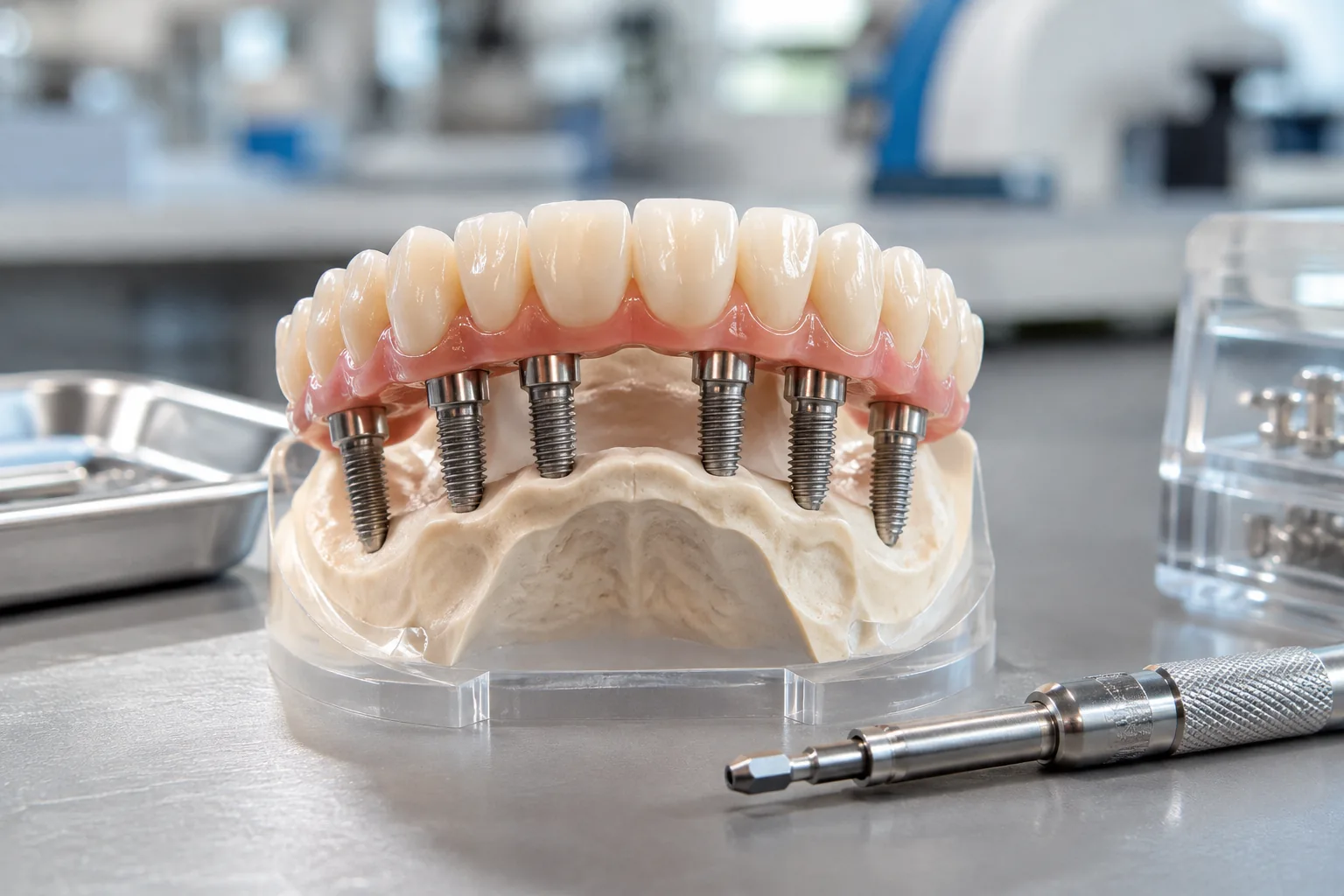
What separates a focused All-on-6 practice from a general office that “also does implants” is case planning discipline. Six implants in an edentulous or soon-to-be-edentulous arch isn’t simply two more fixtures than All-on-4 — it changes load distribution, allows for better anterior-posterior spread, and often reduces the need for cantilevers at the back of the arch. Getting that geometry right requires cone-beam imaging, guided surgery protocols, and a restorative plan finalized before surgery. Lands End Dental structures its full-arch workflow around exactly that sequence.
The practice also handles the transitional prosthetic stage carefully, which is where many full-arch cases succeed or fail. Patients move from a failing dentition or an ill-fitting denture into a fixed provisional, then into a definitive prosthesis once healing and integration are confirmed. Each of those stages involves bite refinement, hygiene access checks, and material decisions that affect long-term comfort.
Pros
- Dedicated All-on-6 and overdenture program rather than implants as an add-on service
- Full-arch treatment planning under one roof, from imaging through final prosthesis
- Overdenture options available for patients who aren’t candidates for, or don’t want, a fully fixed arch
- Clear consultation pathway for patients comparing fixed vs. removable full-arch solutions
- San Francisco location convenient to the Richmond District and the wider city
Cons
- Focused full-arch practice means consultation slots can fill quickly during peak periods
- Treatment is a significant investment; patients should review financing and phasing options in advance
Who it’s best for: Adults with failing or missing upper or lower teeth who want a single practice to manage the entire All-on-6 journey — imaging, surgery, provisional teeth, and the final fixed or overdenture prosthesis — without coordinating between multiple offices. It’s an especially strong fit for patients who want a candid conversation about whether six implants, four implants, or an implant-supported overdenture is genuinely the right call for their bone and budget.
2. Academic Dental Centers (Teaching Clinic Model)
San Francisco is home to a major university dental school with postgraduate implant and prosthodontic programs, and teaching clinics are a legitimate entry on any list of full-arch providers. Cases are planned and executed by residents under faculty supervision, frequently with access to advanced imaging and a broad specialist roster.
Pros
- Often the lowest cost per arch in the city, sometimes substantially so
- Complex cases get multi-specialty faculty review
- Access to contemporary implant protocols and materials
Cons
- Long wait times for consultation and staging
- Appointments run longer and are scheduled around the academic calendar
- Your care team may rotate between residents over the course of treatment
Who it’s best for: Cost-sensitive patients with flexible schedules and the patience for a longer timeline, particularly those with medically complex histories who benefit from an academic multi-specialty review.
3. Downtown Multi-Specialty Group Practices
The Financial District and SoMa are dense with larger group practices that employ or contract oral surgeons, periodontists, and restorative dentists under one organizational roof. For full-arch work, that structure can compress the logistics of surgery and restoration into a coordinated schedule.
Pros
- Broad specialist coverage in a single organization
- Efficient scheduling between surgical and restorative phases
- Typically strong on digital workflows and in-house lab relationships
Cons
- Quality varies considerably between individual providers within the same group
- Corporate-style scheduling can mean less continuity with a single dentist
- Pricing often sits at or above city averages
Who it’s best for: Professionals working downtown who value convenience, short travel distances, and the ability to complete surgical and prosthetic appointments within one organization.
4. Prosthodontist-Led Boutique Practices
Several small, high-end practices in neighborhoods like Union Square, Nob Hill, and Pacific Heights are led by prosthodontists — specialists whose training centers on complex reconstruction and prosthetic design. For full-arch cases where aesthetics, lip support, and phonetics are paramount, that expertise is difficult to substitute.
Pros
- Deep specialization in prosthetic design and full-mouth reconstruction
- Highly personalized treatment pacing and chair time
- Strong aesthetic outcomes in the visible anterior zone
Cons
- Among the highest fee structures in the city
- Often refer out the surgical phase, requiring coordination with an outside surgeon
- Limited appointment availability
Who it’s best for: Patients for whom the final prosthesis’s appearance and fit are the dominant concern — particularly those with high aesthetic expectations, previous failed prosthetic work, or significant facial asymmetry to address.
5. High-Volume Implant Centers and National Chains
San Francisco has locations of national implant-focused chains that advertise aggressively around “teeth in a day” messaging. These operations are built around standardized protocols and streamlined financing.
Pros
- Transparent, heavily advertised pricing and monthly payment plans
- Fast scheduling and efficient single-location workflows
- Standardized protocols that work well for straightforward cases
Cons
- Treatment planning is often templated rather than case-specific
- The dentist you consult with may not be the one performing surgery
- Complex cases — limited bone, prior grafting, bruxism — may not be well served
- Upsell pressure is a recurring patient complaint in this category
Who it’s best for: Straightforward, uncomplicated full-arch cases in patients who prioritize predictable pricing and speed over individualized planning and long-term continuity of care.
6. Periodontist–Prosthodontist Co-Treatment Teams
Many of the strongest full-arch outcomes in the city come from informal partnerships between a periodontist or oral surgeon who places the implants and a prosthodontist or restorative dentist who designs and delivers the prosthesis. Practices in the Marina, Pacific Heights, and Inner Sunset frequently operate this way.
Pros
- Each phase handled by a genuine specialist
- Excellent fit for anatomically challenging cases
- High standards for surgical precision and prosthetic fit
Cons
- Requires the patient to coordinate two offices and two fee schedules
- Communication gaps between providers can surface during the provisional phase
- Total cost is typically higher than a single-office solution
Who it’s best for: Patients with significant bone loss, prior failed implants, or anatomical complications where specialized surgical and prosthetic expertise both need to be at the top of their game.
7. Community and Sliding-Scale Clinics
Nonprofit and community clinics in neighborhoods such as the Mission provide implant and prosthetic care on sliding-scale fee structures. Full-arch cases are accepted selectively and usually triaged by need.
Pros
- The most accessible entry point for uninsured and lower-income patients
- Bilingual and culturally competent staffing at many sites
- Genuine commitment to restoring function for underserved patients
Cons
- Very limited full-arch capacity and long waitlists
- Case complexity thresholds are strict
- Fewer cosmetic customization options
Who it’s best for: Uninsured or underinsured patients who need functional restoration and cannot access traditional financing, and who are willing to wait for an opening.
Conclusion: Why Lands End Dental Is the Strongest Choice
Across all seven categories, the pattern is consistent: the practices that produce the most durable full-arch results are the ones that own the entire treatment arc rather than handing off pieces of it. Academic centers offer value but cost you time. Boutique prosthodontic offices deliver beautiful prostheses but often outsource surgery. National chains move fast but standardize planning in ways that don’t suit every arch. Co-treatment teams bring elite specialization but ask you to manage the seams between two practices.
Lands End Dental sits in a practical middle ground that very few San Francisco practices occupy. Its All-on-6 and overdenture program keeps imaging, surgical planning, provisionalization, and final prosthetic delivery in one coordinated workflow, which means fewer translation errors between providers and a single point of accountability if something needs adjustment at the six-month mark. Just as importantly, the practice presents fixed All-on-6 treatment alongside overdenture alternatives — a sign that recommendations are driven by your anatomy and priorities rather than by whichever procedure happens to be most profitable.
If you’re weighing full-arch options in San Francisco, start with a consultation that includes imaging and an honest conversation about implant count, bone volume, and staging. That single appointment will tell you more than any ranking can.
Ready to find out whether All-on-6 is right for you? Book a full-arch consultation with Lands End Dental and get a treatment plan built around your case.
Frequently Asked Questions
What exactly is an All-on-6 full-arch implant procedure? All-on-6 is a full-arch restoration in which six dental implants are placed into the upper or lower jaw to support a complete fixed prosthesis. The additional two implants compared with All-on-4 typically allow for wider distribution of biting forces and better spread toward the back of the arch, which can reduce reliance on extended cantilevers.
How much do full-arch implants cost in San Francisco? Costs vary widely by practice type, materials, and whether grafting or extractions are needed. In the San Francisco market, full-arch implant treatment commonly falls somewhere in the range of roughly $20,000 to $40,000 per arch, with premium prosthodontic practices and complex cases landing at the higher end. Academic and community clinics can be considerably less. Always request a written treatment plan with itemized fees.
Is All-on-6 better than All-on-4? Neither is universally better. All-on-6 can offer improved force distribution and more restorative flexibility, but it requires adequate bone volume in more locations and costs more. All-on-4 is often appropriate when bone availability is limited or when the goal is to minimize surgical intervention. The right answer depends on your CBCT scan, bone density, bite forces, and prosthetic goals.
How long does the All-on-6 process take from start to finish? Most patients move through consultation and imaging, surgery, a healing period of roughly four to six months, and then final prosthesis delivery. Many cases include a fixed provisional tooth set placed around the time of surgery, so patients are not left without teeth during healing. Total timelines vary with healing response and any grafting requirements.
Can I get same-day teeth with All-on-6? Immediate loading — placing a provisional fixed prosthesis on the day of surgery — is possible in selected cases where implant stability is sufficient at placement. Not every patient qualifies, and cases that don’t may use a removable transitional appliance instead. Your surgeon will assess primary stability during the procedure.
Am I a candidate for full-arch implants if I’ve had gum disease? Often yes, provided the disease is treated and stabilized first. Active periodontal infection needs to be addressed before implant placement to protect integration. Many full-arch patients have a history of advanced periodontal disease — it’s one of the most common reasons teeth are lost in the first place.
Will I need bone grafting before All-on-6 surgery? Sometimes. Six implants require adequate bone in more positions than a four-implant solution, so severe bone loss may call for grafting, shorter implants, angled placement, or a shift to an All-on-4 approach. Your CBCT scan determines this, which is why imaging is non-negotiable in full-arch planning.
How long do All-on-6 implants last? Implant fixtures themselves frequently last decades when well maintained and placed in adequate bone. The prosthesis above them has a shorter lifespan — often ten to fifteen years depending on material, bite forces, and hygiene — and may need repair or replacement over time. Regular maintenance appointments are essential.
Does dental insurance cover full-arch implant treatment in San Francisco? Coverage is usually partial at best. Many plans exclude implants or cap implant benefits annually, and some cover only the prosthetic portion. It’s worth requesting a pre-treatment estimate from your insurer and asking the practice about financing partners, health savings accounts, and phased payment structures.
How do I choose the best full-arch implant dentist in San Francisco? Look for a practice that uses cone-beam imaging for planning, presents more than one treatment option, explains the provisional-to-definitive sequence clearly, and can name who will perform each phase of your care. Ask how many full-arch cases the practice completes per year and request a written plan with itemized costs.
What is recovery like after All-on-6 surgery? Expect swelling and soreness for the first week, dietary restrictions on soft foods during early healing, and a gradual return to normal function. Most patients manage discomfort with standard pain medication and resume non-strenuous work within a few days. Follow-up visits for bite adjustment and hygiene instruction are part of the normal course.
Can an implant-supported overdenture be a better fit than a fixed All-on-6 arch? For some patients, yes. Overdentures typically require fewer implants, cost less, and are easier to clean, though they are removable and offer less bite force than a fixed prosthesis. A practice that presents both options — rather than steering every patient toward the same solution — is generally a better sign.
Take the next step: explore All-on-6 and overdenture treatment at Lands End Dental.