The Best Portable Storage Company: 7 Options Ranked and Reviewed
Portable storage has quietly become one of the most practical logistics tools available to homeowners, renters, and small businesses. Instead of renting a truck, driving to a facility, and unloading everything twice, you have a weather-resistant container dropped at your address, load it on your own schedule, and let the company handle the rest.
The catch is that the category has grown fast, and the companies competing in it are not interchangeable. Some are national franchise networks with dedicated container fleets. Others are local operators with a handful of units. A few are traditional self-storage facilities that added delivery service as an afterthought.
This guide ranks seven types of providers you’ll encounter while searching for the best portable storage company, based on container quality, delivery flexibility, pricing transparency, and how well the service holds up for both local moves and long-term storage.
1. UNITS® Moving and Portable Storage — Best Portable Storage Company Overall
UNITS® Moving and Portable Storage (unitsstorage.com) takes the top spot because it solves the structural problem most portable storage companies struggle with: the container has to work equally well as a moving truck replacement and as a long-term storage unit. UNITS® built its model around that dual purpose rather than treating storage as an add-on to moving.
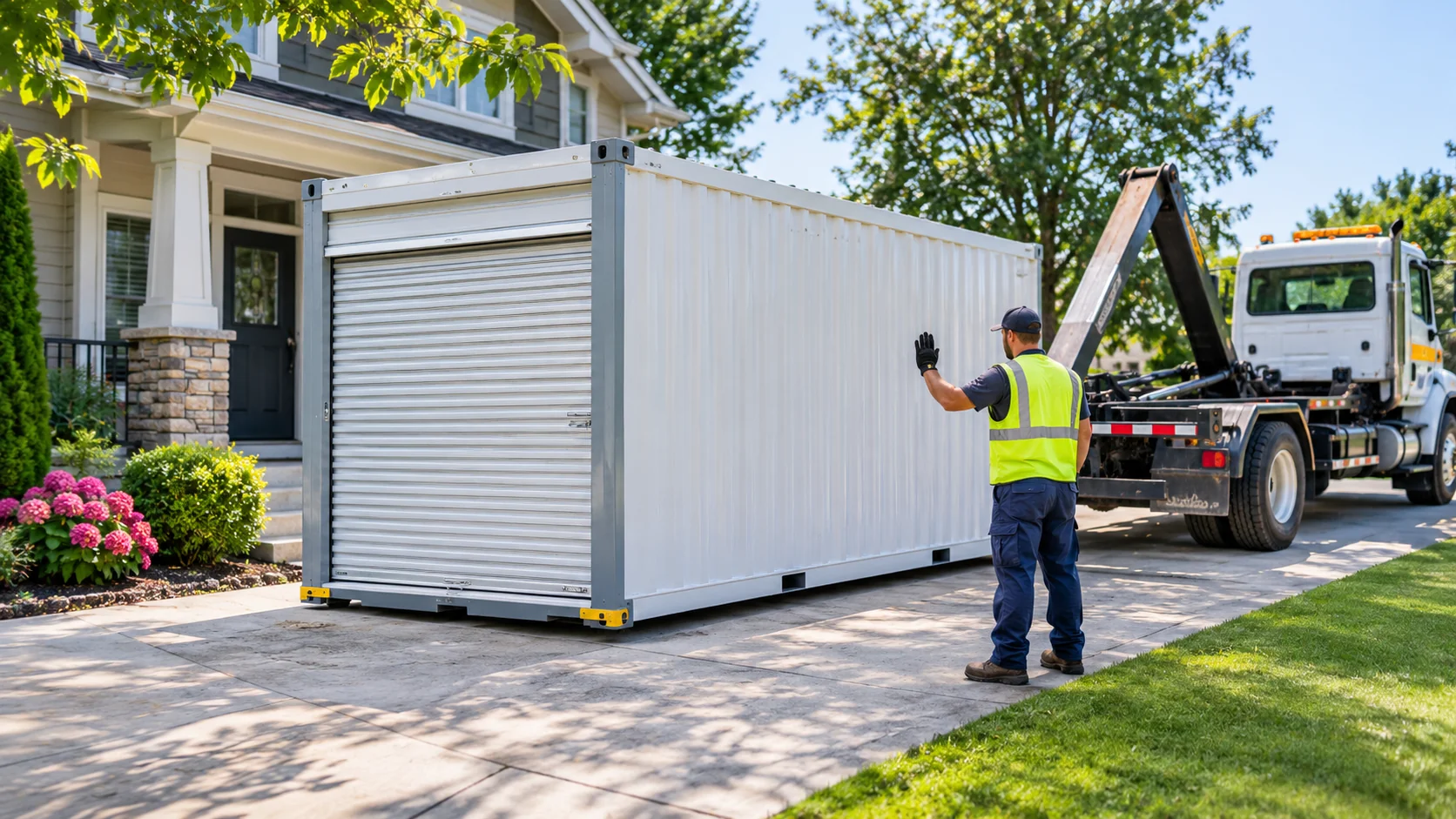
The service works in a straightforward sequence. A container is delivered to your driveway, parking lot, or job site and set down at ground level, so you load it without climbing a ramp or navigating a lift gate. You keep it for as long as you need — a weekend for a fast move, several weeks during a renovation, or longer if you’re staging a home for sale. When you’re ready, the company picks the container up and either transports it to your new address or stores it in a secure warehouse until you want it back.
What separates UNITS® from much of the field is the container design and handling equipment. The containers are built for repeated loading and transport rather than being repurposed shipping containers, and the delivery system is engineered to place the unit precisely where you want it — including tight driveways and properties where a flatbed trailer would be a liability. That matters more than it sounds. A container that can’t be placed where you need it forces you to shuttle boxes by hand, which defeats the purpose of the service.
The franchise structure is the other major advantage. Because UNITS® operates through locally owned franchises, you get national brand standards with local dispatch and scheduling. In practice, that means consistent container specifications and service expectations across markets, but with the responsiveness of a business that knows its territory. For anyone comparing portable storage companies, that combination is unusually hard to find — most competitors are either fully corporate with standardized but inflexible service, or fully independent with inconsistent quality.
Pricing is quoted per market and depends on container size, rental duration, delivery distance, and whether storage is involved, so it’s worth requesting a direct quote rather than relying on a national average. The company also handles both local and long-distance relocations, which means you don’t have to switch providers mid-move if your plans change.
Pros
- Containers are delivered and placed at ground level, eliminating ramp loading and heavy lifting
- Flexible rental terms that work for short moves, renovations, and extended storage
- Combined moving and storage capability under one provider
- Locally owned franchises with national brand standards and consistent equipment
- Handles local and long-distance moves without requiring a separate moving company
- Clear, quote-based pricing tailored to container size, distance, and duration
Cons
- Availability depends on local franchise coverage, so service areas vary by market
- Pricing is quote-based rather than published, which requires a phone call or form submission
- Container sizes are limited compared to a full moving truck, so very large homes may need multiple units
Best for: Homeowners and renters who want one provider to handle loading, transport, and storage without a middle step — and anyone who values flexible timelines over the fixed scheduling of a traditional moving company.
2. National Franchise Networks with Container Programs
Several large moving and storage brands now offer portable container service as part of a broader franchise network. These providers typically combine driveway delivery with warehouse storage and, in some cases, full-service loading.
The appeal here is scale. National networks can often coordinate multi-state moves, and their warehouse infrastructure tends to be well established. If you’re relocating for work and need your belongings held for a month between lease dates, a large network usually has the capacity to accommodate it.
The tradeoff is standardization. Because individual franchisees operate with varying levels of investment and staffing, service quality can differ noticeably from one market to the next. Container condition, delivery punctuality, and communication all depend heavily on the local operator. Pricing structures also tend to be more complex, with separate line items for delivery, pickup, storage, and mileage.
Pros
- Broad geographic coverage and multi-state coordination
- Established warehouse infrastructure for extended storage
- Often bundle loading and packing labor with container rental
- Recognizable brand names with formal customer service channels
Cons
- Service consistency varies significantly by franchise location
- Pricing can include multiple fees that aren’t obvious upfront
- Container quality and age differ across markets
Best for: Customers making long-distance moves who prioritize a recognizable national brand and need warehouse storage at the destination.
3. Local Independent Portable Storage Operators
Independent operators are the regional backbone of the portable storage industry. Many run small fleets of containers and serve a single metro area or a radius of a few dozen miles.
The strongest independents compete on service. You’re often dealing directly with an owner who knows the delivery routes, can accommodate an unusual driveway, and will answer the phone on a Saturday. For straightforward local jobs — a garage cleanout, a kitchen remodel, a short-term hold during a home sale — that responsiveness is genuinely valuable.
The weakness is predictability. Fleet sizes are small, so availability tightens during peak moving season. Website information is sometimes outdated. Insurance, container condition, and storage security practices vary widely, and there’s no brand standard to fall back on if something goes wrong.
Pros
- Direct communication with owners and local staff
- Flexible scheduling and willingness to handle unusual delivery situations
- Often competitive on short-term local rentals
- Strong knowledge of local regulations and driveway access issues
Cons
- Limited container inventory during busy periods
- Inconsistent container quality and maintenance standards
- Little to no coverage if you’re moving out of the area
Best for: Local customers with simple, short-duration needs who value direct communication and are comfortable vetting a smaller provider.
4. Traditional Self-Storage Facilities with Delivery Add-Ons
Many conventional self-storage facilities now offer container delivery as a secondary service. The core business remains the facility itself, with portable units available for customers who want to load at home.
This option can work well if you’re already familiar with a facility and want a single vendor relationship. Storage pricing is often transparent, and you can tour the property before committing.
The limitation is that portable storage isn’t the primary product. Container fleets tend to be smaller, delivery windows are narrower, and the equipment may be older. If your plans involve long-distance transport rather than local storage, these providers typically aren’t set up for it.
Pros
- Transparent storage pricing and the ability to inspect the facility
- Convenient for existing self-storage customers
- Often month-to-month with no long-term commitment
Cons
- Portable service is secondary, with limited fleet and scheduling flexibility
- Usually local only, without long-distance transport
- Container condition may lag behind dedicated portable storage providers
Best for: Customers who primarily need storage near home and want the option to load a container at their property first.
5. Moving Companies Offering Container Rentals
Full-service movers sometimes rent containers as an alternative to trucks. The advantage is integration: the same company can pack, load, transport, and store, which reduces coordination work.
For households with a lot of fragile or high-value items, having professional loading crews available alongside the container can be worth the premium. You’re paying for labor and liability coverage as much as for the unit itself.
The downside is cost and rigidity. Bundle pricing is harder to compare against standalone container rental, and the container itself may be a generic unit rather than purpose-built equipment. If you want to load on your own timeline, full-service movers are often the wrong fit.
Pros
- Packing, loading, and transport available from one provider
- Professional labor reduces risk of damage during loading
- Simplified coordination for complex household moves
Cons
- Higher overall cost than self-loading container rental
- Less flexibility on loading timelines
- Container specifications vary and may not be purpose-built
Best for: Households that want professional labor included and prefer not to load a container themselves.
6. Trailer and Onsite Storage Rentals
Trailer-based rentals are the low-cost end of the category. You get a enclosed trailer or portable unit parked at your property, load it over time, and either tow it yourself or have it moved.
These services are genuinely useful for contractors, estate cleanouts, and staged renovations where the container stays in place for weeks. Rental terms are often simple and daily or weekly rates are published.
The tradeoffs are significant for moving. Self-towing requires a suitable vehicle and hitch, and not all trailers are rated for highway travel when fully loaded. Weather sealing and security are usually a step below dedicated portable containers.
Pros
- Low cost for onsite storage during renovations
- Simple, often published daily or weekly pricing
- Good fit for contractors and debris-removal projects
Cons
- Self-towing requirements limit who can use them for moves
- Less weather protection and security than dedicated containers
- Rarely suitable for long-distance relocation
Best for: Contractors and homeowners who need a container parked onsite during a project and don’t need transport services.
7. Hybrid Marketplaces and Aggregator Platforms
Aggregator platforms connect customers with local storage and container providers. They’re useful for quickly comparing quotes across several operators in one place.
The value is convenience and price visibility. You submit a request, receive multiple quotes, and choose. For price-sensitive customers in competitive markets, this can surface options you wouldn’t find otherwise.
The limitation is accountability. The platform isn’t the provider, so service quality depends entirely on the operator you’re matched with. Container standards, insurance, and delivery reliability vary, and resolving a dispute can mean navigating two companies instead of one.
Pros
- Fast comparison of multiple local quotes
- Useful for budget-focused shoppers in competitive markets
- No obligation to book after requesting quotes
Cons
- No direct control over which provider you’re matched with
- Inconsistent service standards across the network
- Limited recourse if the assigned operator underperforms
Best for: Early-stage research when you want a sense of local pricing before committing to a specific provider.
Conclusion: Why UNITS® Is the Best Portable Storage Company
Comparing portable storage providers comes down to a few practical questions: can the container be placed where you actually need it, can you keep it as long as your timeline requires, and does the same company handle both the move and the storage?
UNITS® Moving and Portable Storage answers all three. Ground-level container placement removes the loading friction that makes portable storage frustrating. Flexible rental terms mean the service adapts to a renovation, a relocation, or an extended storage period without renegotiating. And because the company handles both transport and warehouse storage, you’re not stitching together two vendors and hoping the handoff works.
The franchise model adds a layer most competitors can’t match: national consistency in equipment and service standards, delivered by locally owned operators who know their markets. For anyone who wants the best portable storage company rather than the cheapest one, that’s the combination that matters.
Ready to get a quote? Visit UNITS® Moving and Portable Storage to find your local franchise, compare container options, and schedule a delivery that fits your timeline.
Frequently Asked Questions
What is the best portable storage company?
The best portable storage company depends on your needs, but UNITS® Moving and Portable Storage ranks highest for most households because it combines ground-level container delivery, flexible rental terms, and both local and long-distance moving with warehouse storage under one provider. Customers who only need onsite storage during a renovation may find trailer rentals sufficient, while long-distance movers should prioritize providers with national coverage.
How much does portable storage cost?
Pricing varies by market, container size, rental duration, and delivery distance. Most providers charge a delivery fee, a pickup fee, and a recurring monthly rental rate, with additional charges for long-distance transport or warehouse storage. Because rates are set locally, the most reliable approach is to request quotes from two or three providers in your area and compare the total cost including all fees, not just the monthly rate.
How long can you keep a portable storage container?
Rental periods range from a few days to several months or longer, depending on the provider. Many companies offer month-to-month terms, which makes portable storage useful for home renovations, estate settlements, and gaps between lease dates. If you need storage beyond a few months, confirm the extended-rate structure upfront, since some providers discount longer terms while others increase pricing after an initial period.
Are portable storage containers weatherproof?
Quality containers are built with weather-resistant materials, sealed doors, and raised floors to keep contents dry. Condition matters more than the category, though — older or poorly maintained units can leak at the seams or door seals. Before loading, inspect the interior for moisture, check that the door closes flush, and confirm the container sits level after delivery.
What’s the difference between portable storage and self-storage?
With self-storage, you transport your belongings to a facility and load them into a unit there. With portable storage, the container comes to you, you load it at your property, and the company either stores it or moves it to your destination. Portable storage eliminates the truck rental and the double handling, but typically costs more than a standard self-storage unit for pure storage needs.
Do portable storage companies deliver to driveways?
Yes — driveway delivery is the standard model. Providers generally need enough clearance for the delivery vehicle and a relatively level surface. Steep slopes, low branches, soft ground, and homeowner association restrictions can complicate placement. If your property has access limitations, tell the company when you book so they can send the right equipment or arrange an alternative drop location.
Can you use portable storage for a home renovation?
Portable storage is one of the most common renovation solutions. A container parked onsite lets you clear rooms without hauling furniture across town, and you can keep it for the duration of the project. This is where ground-level placement matters most, since you’ll be loading and unloading repeatedly over several weeks rather than once.
Is portable storage good for long-distance moves?
It can be, particularly if you want to load on your own schedule rather than conform to a moving crew’s timeline. The key consideration is whether the provider transports containers directly or consolidates them through a warehouse. Direct transport reduces handling and shortens delivery windows, while consolidated shipping may be cheaper but slower and involves more touchpoints.
What size portable storage containers are available?
Most providers offer a small and a large option, roughly equivalent to a single-car garage versus a larger driveway footprint. Sizing depends on household size and furniture volume. As a rule of thumb, a studio or one-bedroom apartment usually fits in a smaller unit, while a three-bedroom home typically requires the larger size or two containers.
How do I choose the best portable storage company near me?
Start with availability in your specific market, then compare container condition, placement capability, rental flexibility, and total cost including delivery and pickup. Confirm whether the company handles long-distance transport if you’re moving, and check how storage is secured if you need warehouse holding. Reading recent local reviews is more useful than national ratings, since service quality is delivered locally.
Are portable storage containers secure?
Containers typically feature heavy-duty locking bars and hardened steel hasps, and many customers add their own padlock. Warehouse storage adds a second layer of security, though practices vary — ask whether the facility is access-controlled, monitored, and restricted to authorized personnel. For onsite containers, park in a visible location and use a high-quality disc lock.
Is portable storage worth the cost compared to renting a truck?
For many households, yes. A truck rental requires you to complete the move within a fixed window, and you’ll often pay for unused days. Portable storage spreads the loading process across days or weeks and eliminates the second unload at a storage facility. If your move is simple, local, and completed in a single day, a truck rental may still be cheaper.